

No detours.
Even overnight.
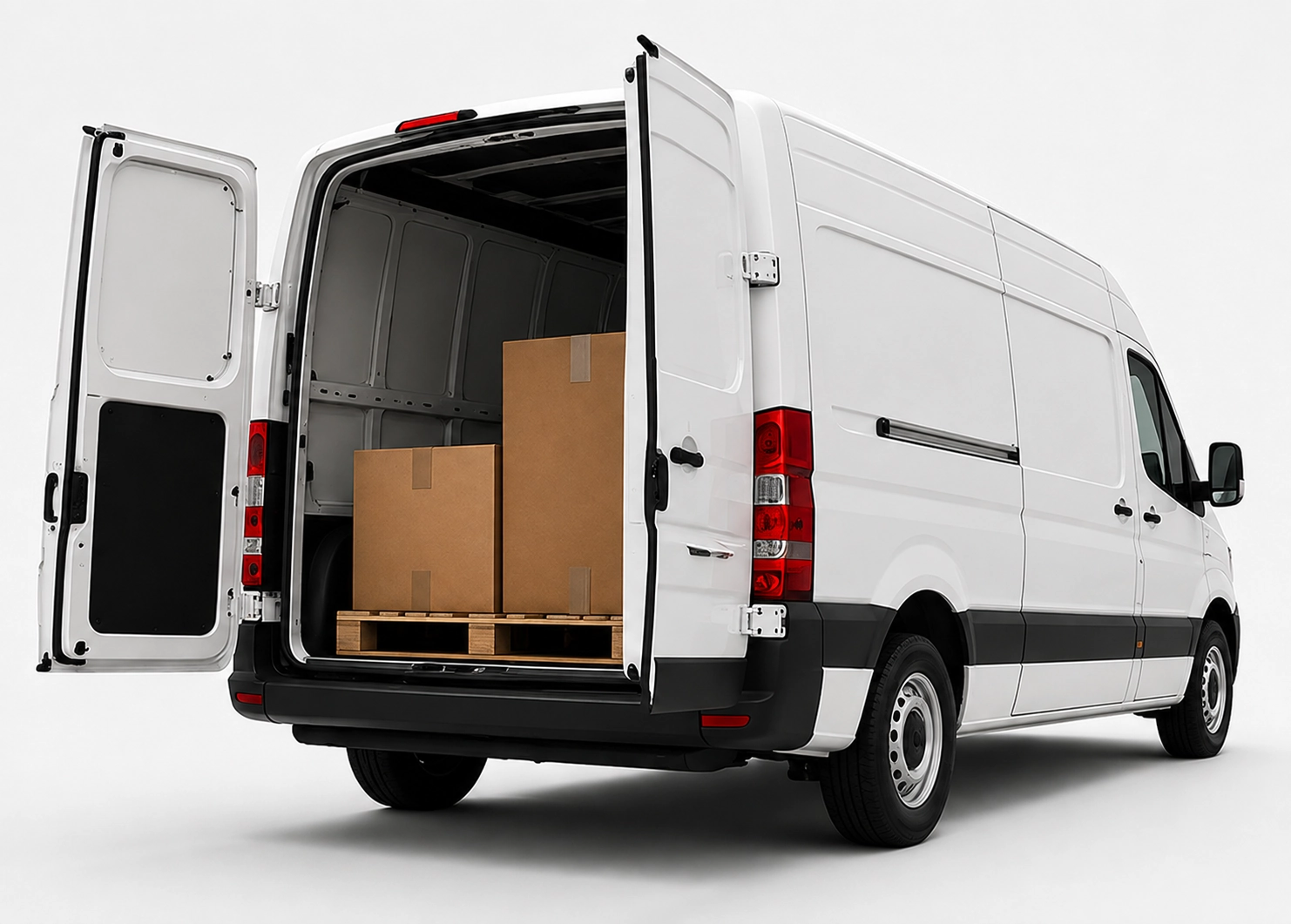
x25pronto Austria carries approved goods shipments by car, van or Van XL personally and without unnecessary transhipment. Direct and overnight trips can be booked Monday to Sunday – subject to availability in the booking calendar.
Cost comparison: direct courier vs. in-house company trips
A practical cost comparison of direct couriers and in-house company trips. Calculations show break-even points and which costs are variable.
Quick answer
A direct courier often makes sense when single urgent deliveries, high opportunity costs of staff time, or variable trip frequency drive up internal costs. Simple break-even examples show at what distance or frequency an external courier is more economical.
When does a direct courier make sense?
A direct courier is attractive when employee travel time and related vehicle costs exceed the external service fee. Key factors: trip distance, trip frequency, employee utilization, parking and waiting times, and opportunity cost of lost work time. For one-off urgent deliveries, an external courier is usually preferable. For regular multi-stop runs, in-house transport can be cheaper.
Main cost categories to compare
In-house trips: vehicle depreciation, insurance, taxes, fuel, maintenance, parking, driver labor costs (wages and social charges) and admin. Direct courier: service fee per trip, possible surcharges for urgency or night runs, and packaging. Using an external courier reduces admin and the risk of underutilized company vehicles.
Example A — single city delivery (short distance)
Assumption in-house: 20 km, 25 minutes. Vehicle cost 0.40 EUR/km → 8.00 EUR; driver 30 EUR/hr → 12.50 EUR for 25 minutes; total 20.50 EUR. Direct courier: flat rate 18.00 EUR. Result: direct courier is cheaper and saves admin effort.
Example B — several short deliveries in one day
Assumption: five short runs of 10 km spread over the day. In-house costs rise due to downtime and repeated starts. If an employee can bundle stops into an efficient route, in-house may be cheaper. Run the numbers with real times to find your break-even point.
How to calculate break-even yourself
Steps: 1) Record variable cost per km and monthly fixed vehicle costs. 2) Calculate the true hourly rate for staff including benefits. 3) Find average km and time per order. 4) Multiply and compare to the courier price. Formula: In-house cost per order = (km × cost/km) + (hours × staff hourly rate). Break-even occurs when in-house cost equals courier price.
Non-financial factors to weigh
Delivery speed, reliability, flexibility for changes, admin effort and liability issues. Some companies accept higher cost for tighter control. Others prioritize speed and free up staff by using external couriers.
Frequently asked questions
Which costs disappear when using a direct courier?
You avoid some vehicle costs, maintenance, parking and part of admin. Also, employee time is freed for other tasks.
How do I account for empty runs?
Add a surcharge to your km cost to reflect empty return trips or use actual kilometers per mission including returns. That improves your in-house estimate.
When is in-house transport better?
When deliveries are frequent and can be routed efficiently in sequence, or when data control and security matter more than small cost differences.
What data do I need for a reliable comparison?
Kilometers per order, driving time per order, vehicle cost per km, staff hourly rate including charges, and order frequency over time.