

No detours.
Even overnight.
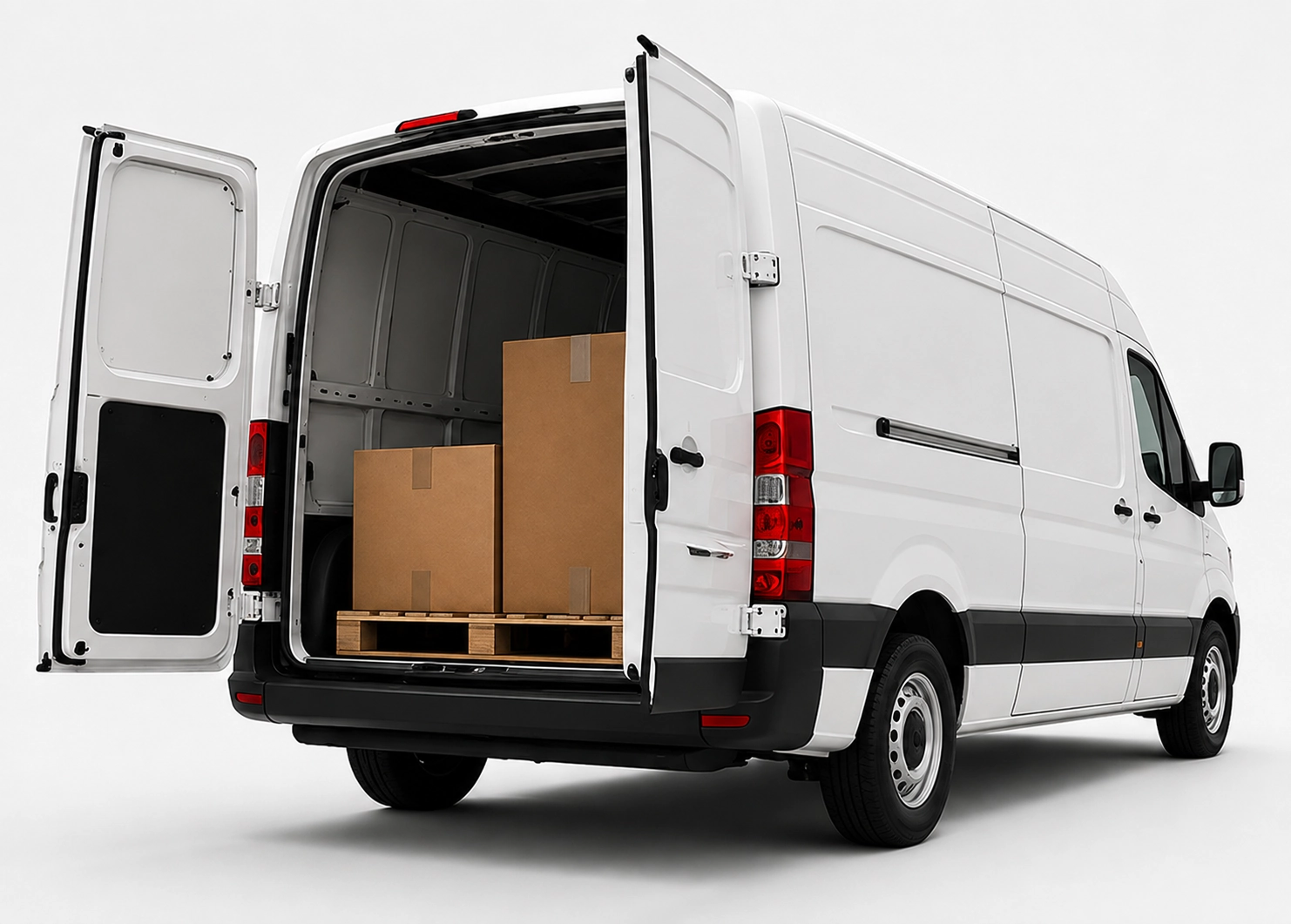
x25pronto Austria carries approved goods shipments by car, van or Van XL personally and without unnecessary transhipment. Direct and overnight trips can be booked Monday to Sunday – subject to availability in the booking calendar.
Regional pooling: Multiple small shipments by direct ride
A direct ride can move several small shipments efficiently. Learn how to plan routes, set delivery windows and standardize packing for regional city pickups.
Quick answer
Yes. You can efficiently pool several small regional shipments on a single direct ride. Short answer: group stops into corridors, pick practical delivery windows for city traffic, and standardize package sizes. This reduces empty miles, speeds up handovers and simplifies communication.
When pooling by direct ride makes sense
Pooling works when many small shipments go to nearby delivery points. Typical examples are spare parts to several workshops, supplies for multiple shops in one district, or returns collected at the same shopping center. If each shipment fits in a passenger car and delivery points fall inside a tight corridor, a direct ride is usually faster and simpler than separate runs.
Route planning to cut driving time
Divide destinations into corridors—e.g., north, south, inner city. Start with the tightest cluster. Prioritize fixed appointment windows first, then flexible stops. Sequence stops to avoid backtracking: a loop or Z-shaped route often beats returning to base. Simple map tools and small TSP solvers help, but for short distances a map app and clear stop priorities are enough.
Managing delivery windows for few stops
Set realistic windows of 30–90 minutes depending on parking and handover time in urban areas. Stack close windows together, for example three drops within a two-hour block. Notify recipients with an ETA for each stop. Use flexible acceptance windows where possible to tighten routing and avoid idle time.
Standardized packing and loading
Define standard package dimensions that fit common car trunks. Use stackable, padded containers and clear labels with address and priority. This speeds loading and unloading. Simple load restraints and anti-slip mats prevent shifting. Set maximum item sizes so no shipment blocks the load area.
Communication and proof of delivery
Notify recipients shortly before arrival by SMS or email. Share an ETA and send a quick confirmation after handover. For B2B, a photo on delivery or a digital signature is usually sufficient. Clear handover rules reduce questions and speed stops.
Balancing costs and benefits
Pooling reduces the number of trips and total kilometers. Expect savings from fewer empty runs and quicker handovers. Account for possible extra time for sorting and short waits. With structured planning, direct rides improve vehicle utilization and make scheduling more predictable.
Frequently asked questions
How many small shipments fit on one direct ride?
It depends on the vehicle and package sizes. A typical car or small van can usually carry 8–20 small packages. Standardize package sizes to calculate capacity precisely.
What delivery window should I set for urban stops?
Plan 30–90 minutes per stop depending on parking effort and paperwork. Pure drop-offs without documentation may need only 15–30 minutes. Consider local parking rules.
What info should recipients receive?
Send address, ETA, driver contact number and a short parcel description. For valuable items use photo proof or a digital signature.
Do I need special software to optimize direct rides?
Not necessarily. For small volumes a map app plus a prioritized stop list works. For regular, higher volumes, simple routing tools or an integration with a booking platform help.