

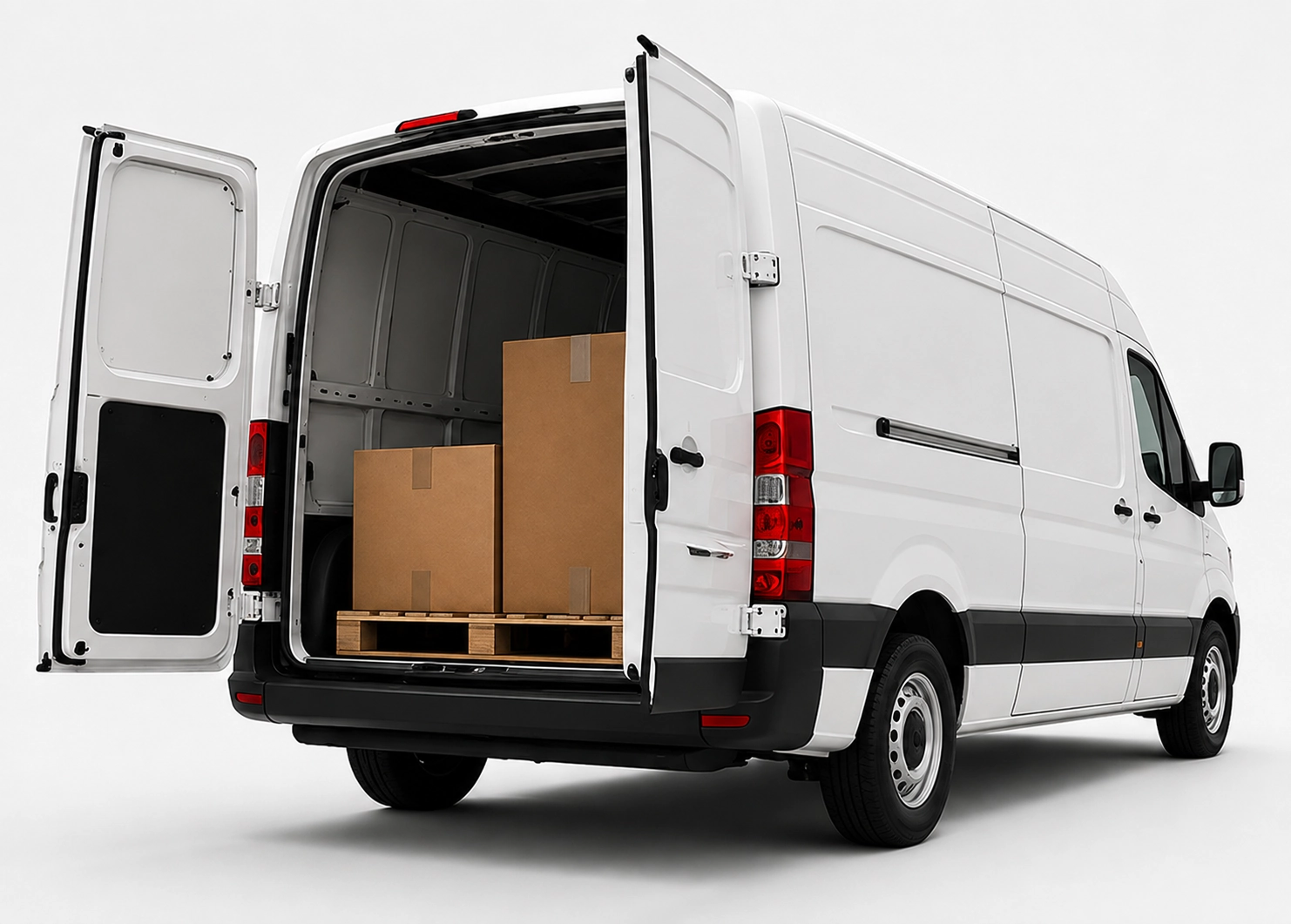
No detours.
Even overnight.
x25pronto Austria carries approved goods shipments by car, van or Van XL personally and without unnecessary transhipment. Direct and overnight trips can be booked Monday to Sunday – subject to availability in the booking calendar.
Fast packing routines for assembly warehouses and workshops
Set up fast packing stations in assembly warehouses and workshops: workflows, checklists, tools and staff training for high shipment volumes.
Quick answer
Fast packing routines cut errors, shorten throughput times and ensure steady shipping quality. Create fixed work zones, define standard packing steps, use checklists and the right tools (scales, barcode scanners, padding and labels). Train staff on unified procedures and track metrics like pack time per shipment and error rates. Repeatable routines make assembly warehouses and workshops ready for high volumes and smooth handover to couriers.
Why standardized packing routines matter
Assembly warehouses and workshops often handle many small parcels. Without standards, mistakes happen: wrong addresses, poor cushioning or missing documents. Standard routines reduce mistakes, speed up onboarding and make cooperation with couriers more reliable. Clear steps save time on every shipment.
Basic layout of an efficient packing station
Design the packing station as a logical sequence: inspect, pack/pad, weigh/label, document and hand over. Keep key tools within reach: sturdy tables, scales, label printers, barcode scanners, cutters, tape, various filler materials and visible checklists. Maintain material stocks with reorder points to avoid delays.
A concrete checklist for each shipment
1) Verify items and quantities. 2) Choose the right box (size, strength). 3) Adjust padding to item fragility. 4) Seal and reinforce the parcel. 5) Record weight and dimensions. 6) Verify address, phone and documents. 7) Print and attach label. 8) Final visual check and move to courier pickup area. Post the checklist at the station.
Tools and supplies that save time
Invest in targeted tools: digital scales with interfaces, thermal label printers, mobile barcode scanners, tape dispensers and standard box sizes. Air cushions or eco-fill reduce damage-related returns. Standard box sizes simplify storage and speed packing.
Staff training and role assignment
Train new staff at the station with short hands-on sessions. Use one-page instructions and short training videos. Define roles: inspector, packer, labeler, handover. Rotate roles to avoid bottlenecks. Hold short feedback meetings to improve the process.
KPIs and continuous improvement
Track pack time per shipment, error rate (wrong address, missing parts, damage) and material usage. Run short A/B tests: one hour with the standard process vs. one hour with an optimized flow. Collect team suggestions and update checklists. This keeps routines efficient as volumes grow.
Frequently asked questions
How much space does a packing station need?
A basic packing station often fits in 3–6 square meters. Key needs are a stable table, shelving for supplies and a handover area for couriers.
Which box sizes should I keep in stock?
Keep three to five standard sizes that cover your most frequent items. This reduces voids, saves filler and cuts packing time.
How often should staff be retrained?
Short training at onboarding and semi-annual refreshers usually suffice. Do quick practice sessions whenever processes change.
How do I connect packing stations to courier pickup?
Set fixed pickup times or a courier collection point. Log shipments with tracking IDs and hand them over neatly labeled and stacked.