

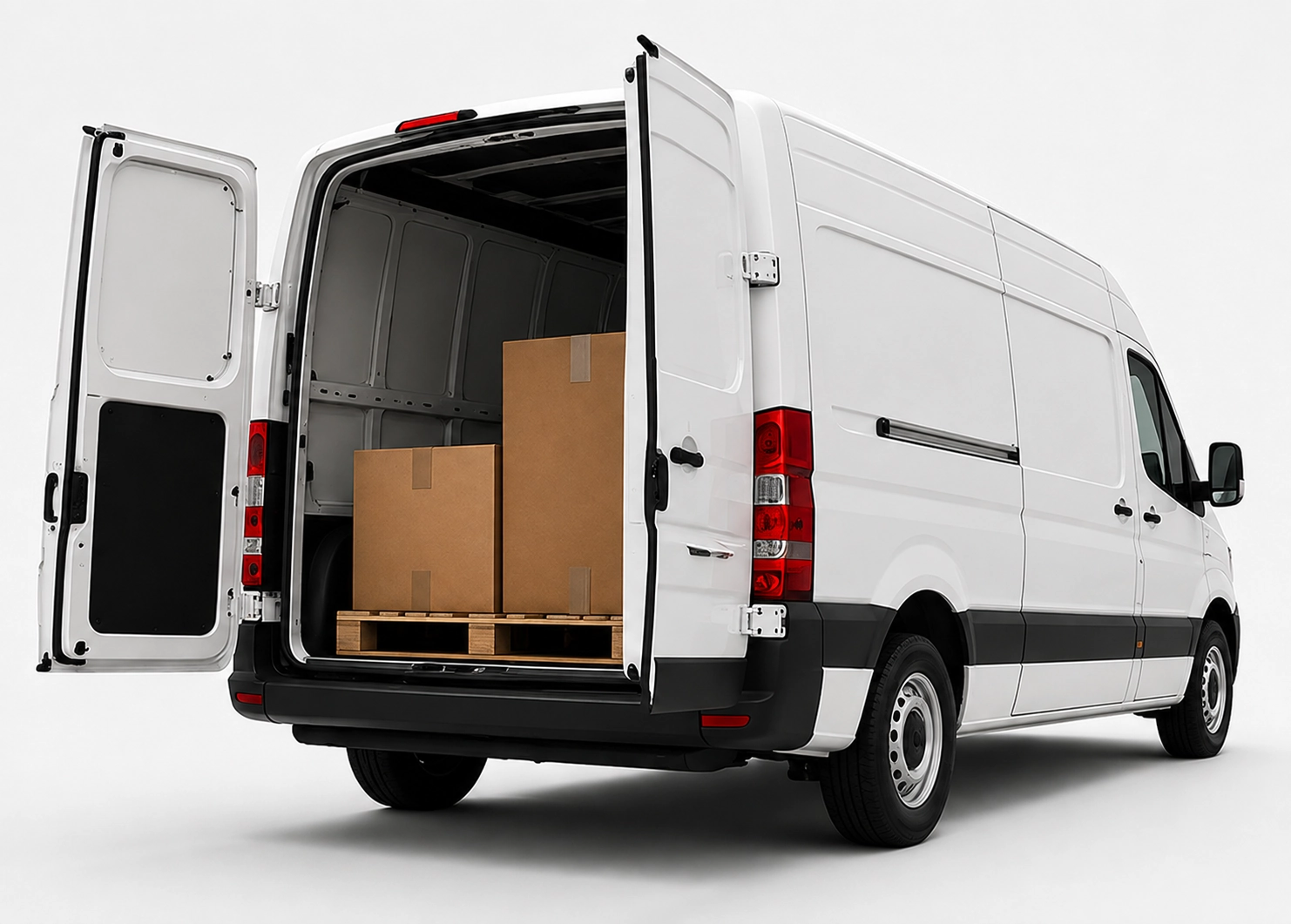
No detours.
Even overnight.
x25pronto Austria carries approved goods shipments by car, van or Van XL personally and without unnecessary transhipment. Direct and overnight trips can be booked Monday to Sunday – subject to availability in the booking calendar.
Secure packing for car courier transports
Pack securely for courier trips in a car: choose protective materials, fix loads in the vehicle and document condition. Examples for glass, electronics and multi-piece shipments.
Quick answer
Secure packing means choosing the right protection, fixing items inside the car to prevent movement and documenting the condition. Use shock-absorbing materials, suitable outer boxes, internal dividers and fastening. Label fragile items and include transport papers plus photos. This lowers damage risk and speeds up any claim process.
Why correct packing matters for car couriers
A car has less cargo space and fewer securing options than a van. Small impacts or sliding loads can damage sensitive goods. Correct packing protects items, makes handling easier for the courier and reduces disputes at delivery.
Basic kit: materials and tools
Use sturdy outer boxes of the right size, bubble wrap, corrugated inserts, edge protectors, foam inserts and packing paper. Tape, a tape dispenser, single-use straps, cable ties and a small cutter are useful. For very fragile pieces, consider custom-cut foam or molded inserts.
Packing principles: protection, fixation, separation
Place the most delicate item in the center and surround it with 5–10 cm of shock-absorbing material. Use internal padding so parts do not touch. Fill all voids. Label the outside with handling instructions (e.g. "top", "fragile") and number multi-piece shipments.
Fixing in the vehicle: practical tips for cars
Use available anchor points like hooks in the boot, cargo dividers or seat belts. Stack small boxes with heavy items at the bottom. Secure parcels with straps or anti-slip mats. For many small parts, use lockable transport boxes that can be fixed to the floor.
Specific examples: glass, electronics, multi-piece sets
Glass: pack individually with foam and edge protectors in a double-padded box. Electronics: use anti-static sleeves, shock-absorbing padding and leave distance to hard edges. Multi-piece sets: secure each part, number them, include a packing list and bundle them in a sturdy outer box.
Documentation and handover: photos and checklist
Photograph the packed shipment from several angles and note any visible defects before loading. Include a packing list and handling notes in a sealed envelope. Clearly mark sender, receiver and item description on the outside.
Frequently asked questions
What box size should I choose?
Pick a box that allows 5–10 cm of protective fill around the item. Too much empty space increases damage risk.
How do I secure multiple parcels in a car?
Place heavy items low, use anti-slip mats, straps or lockable transport boxes. Avoid loose gaps between parcels.
Should I use special labels?
Yes. Mark "fragile", "top" and number partial shipments. Add a packing list inside when items are valuable or delicate.
How do I document condition before transport?
Take clear photos of the packed shipment, record visible defects and include the documentation with the shipment. This speeds up any claim.