

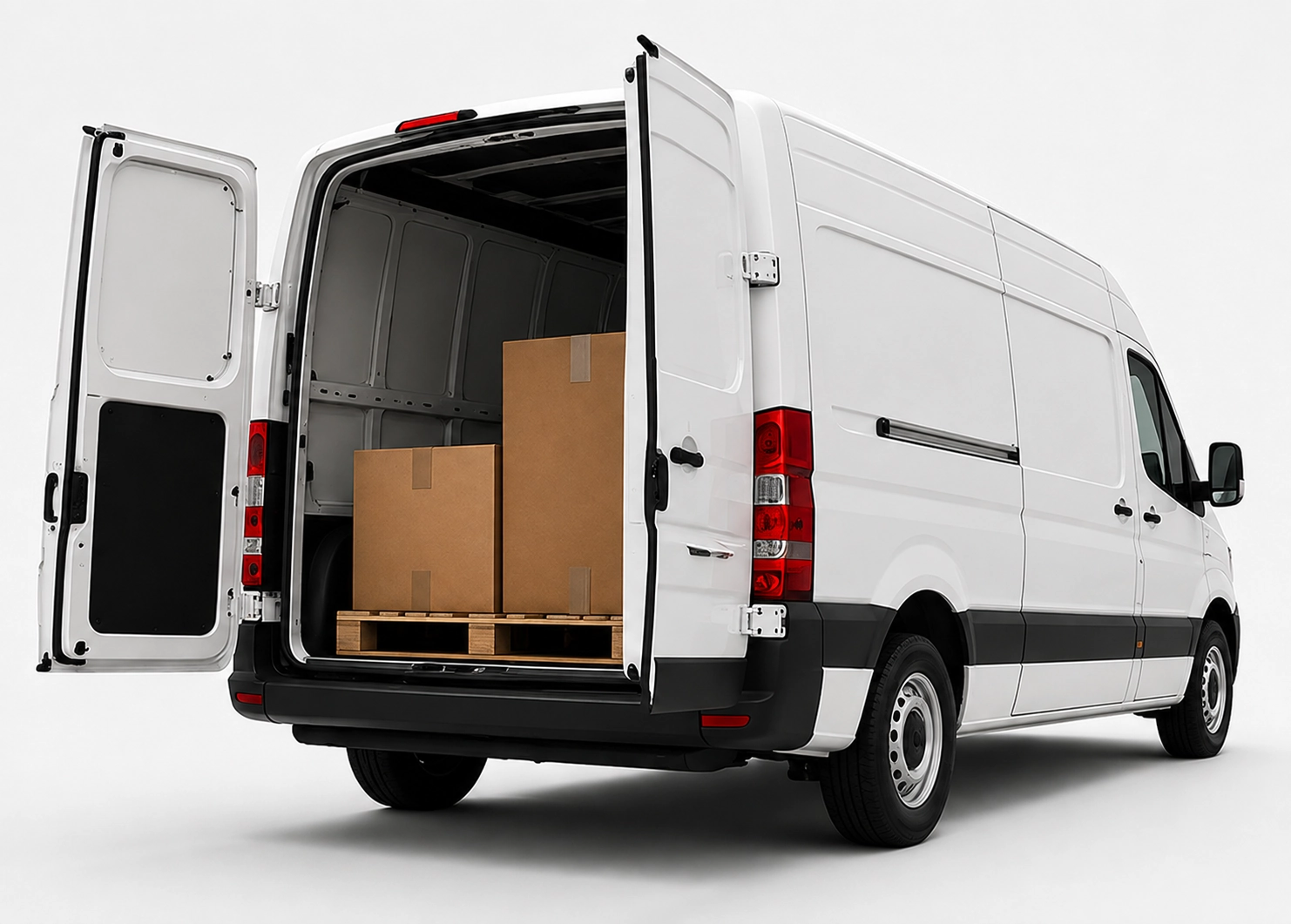
No detours.
Even overnight.
x25pronto Austria carries approved goods shipments by car, van or Van XL personally and without unnecessary transhipment. Direct and overnight trips can be booked Monday to Sunday – subject to availability in the booking calendar.
Packaging checklist for consolidated freight and direct courier
A practical checklist with material recommendations, padding thickness and labelling tips for shipments carried by consolidated freight or direct courier (car transport).
Quick answer
Use this checklist to pack shipments safely for consolidated freight or direct courier (car transport). It gives concrete packaging types, material thicknesses and labelling tips for common product groups.
Overview: what matters
Direct-courier and consolidated shipments by car must be stable, shock-resistant for short transport and clearly labelled. Use suitable inner padding, a rigid outer box and secure moving parts. Check dimensions, weight and return options when you book.
Basic materials and minimum thickness
Cardboard: single-wall (B-flute) for light non-fragile items; double-wall (BC- or EB-flute) for medium products; triple-wall for heavy or sensitive items. Padding: bubble wrap (30–50 μm film, 10–20 mm bubbles), foam sheets 5–10 mm for light protection, 20–40 mm for sensitive electronics. Kraft paper: 80–120 g/m² for void fill. Edge protectors: 2–4 mm rigid cardboard or plastic for load-bearing edges.
Packing by product group
Electronics: individual wrap in antistatic packaging (ESD bag), 20–30 mm foam or bubble wrap around the device, rigid outer box with double wall. Glass and ceramics: two layers of padding; bubble wrap directly on the item (20–30 mm), plus separators or partitions. Metal parts: apply rust protection film for bare metal; secure with firm internal supports and edge protection. Clothing/textiles: dry, clean and sealed in plastic, then a lightweight box or mailer. Liquids (permitted small quantities): double containment — sealed primary closure, secondary container (bag or screw-top jar) plus cushioning and upright transport where possible.
Special tips for consolidated freight
Consolidated freight often involves multiple handlings. Use extra inner padding and reinforced edges. Seal boxes with at least three tape strips (closure plus edges). Label recipient and sender clearly. Group small parcels inside a larger outer package to avoid loss during transfers.
Labeling and documents
Use stickers: “Fragile”, “This side up” and “Do not stack” if needed. Place labels on the largest side. Use weatherproof labels and protect shipment documents with a clear pouch. For consolidated freight: ensure barcode/label visibility and include packing list inside or a QR-code for quick checks.
Quick packing checklist
1) Item clean and dry; 2) Inner padding at least 10–20 mm (electronics 20–40 mm); 3) ESD protection for electronics; 4) Secondary container for liquids; 5) Edge protection and double-wall outer box for medium/heavy items; 6) Minimum three tape strips; 7) Clear addressing + sender; 8) Fragile marking where needed; 9) Dimensions/weight checked for booking; 10) Documents protected and visible.
Frequently asked questions
What box strength is enough for electronics?
Double-wall cardboard (BC- or EB-flute) combined with antistatic inner packaging and 20–30 mm padding around the device is recommended.
How should I pack small parts for consolidated freight?
Bundle small parts in a sealed bag, place them in a small sturdy box, then put that inside a larger outer package with cushioning.
Do liquids need special labels?
Yes. Even allowed small quantities require secure primary and secondary containment and clear internal labelling. Follow booking rules for permitted contents.
How can I reduce damage during transfers?
Use reinforced outer boxes, extra inner padding, edge protection and bundle items so they are not loose during multiple handlings.