

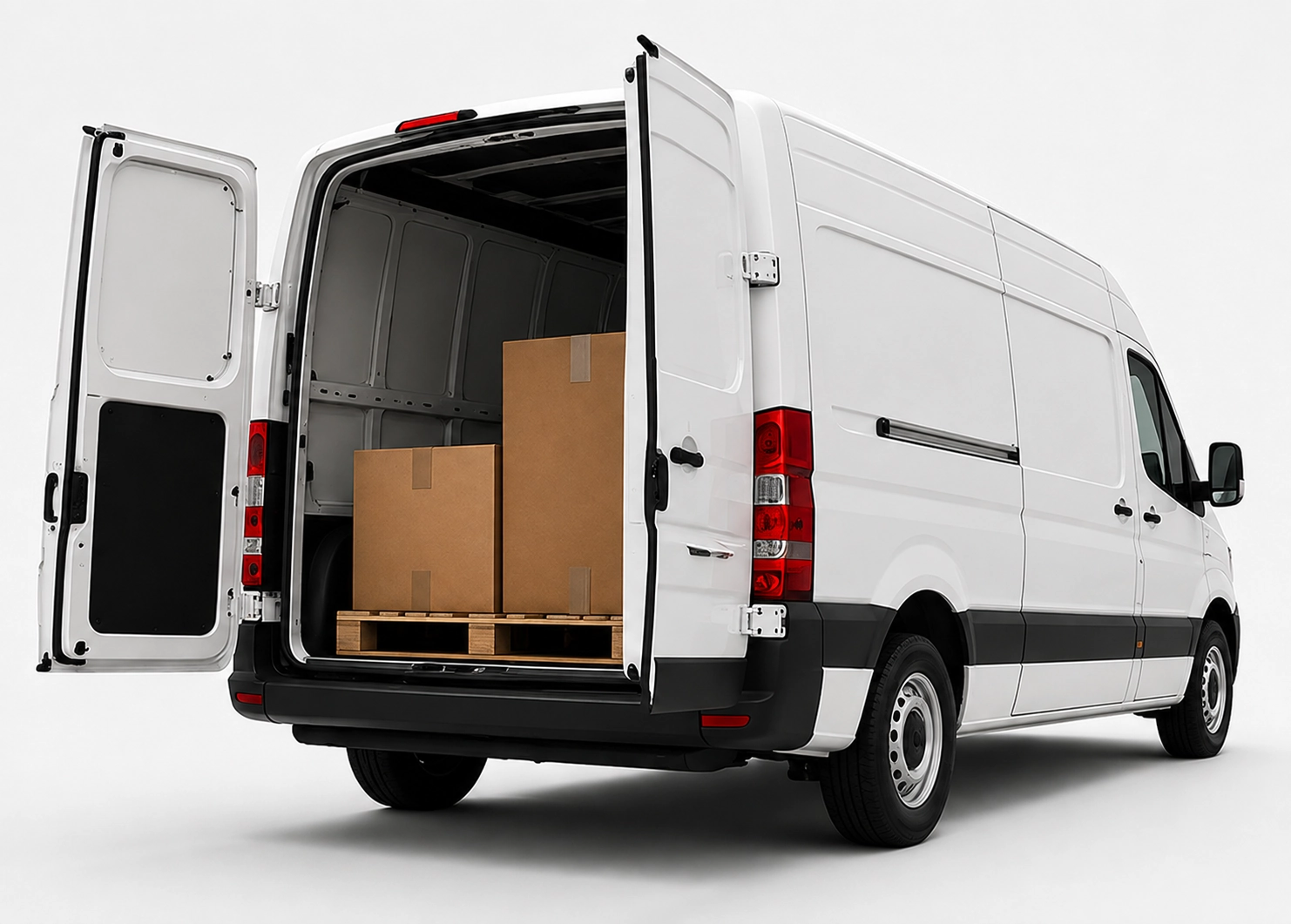
No detours.
Even overnight.
x25pronto Austria carries approved goods shipments by car, van or Van XL personally and without unnecessary transhipment. Direct and overnight trips can be booked Monday to Sunday – subject to availability in the booking calendar.
How SMEs save shipping costs: direct courier vs. consolidated freight
SMEs must choose between speed and scale: Is a direct courier cheaper than consolidated freight? We compare costs, transit time and risk and give clear decision rules.
Quick answer
Short answer: A direct courier usually makes sense for urgent, valuable or time-sensitive single shipments; consolidated freight is typically cheaper for non-urgent, volume shipments. Key factors are shipment value, volume, delivery window and inventory/handling costs.
1. Key cost components
Shipping costs are more than the transport fee. Include: transport charge, packaging, warehouse handling, insurance, return risk and opportunity costs from delays. Consolidation lowers per-item transport cost through volume. A direct courier charges the exclusive route but avoids extra handling steps and transshipments.
2. Transit time and predictability
Direct couriers go from sender to recipient without detours. That reduces transit time and stops. For urgent deliveries—just-in-time parts or event material—this improves reliability. Consolidated freight follows set routes with pickups and hub transfers, which increases and can vary transit time.
3. Risk and damage exposure
Each transshipment raises the risk of damage or loss. Direct courier reduces contacts and therefore potential damage. This matters for fragile or valuable goods and shipments with special handling. Consolidated freight works well for robust items where careful packaging mitigates risk.
4. When a direct courier pays off
Choose direct courier when one or more of these apply: - High item value or sensitive goods - Tight delivery windows or fixed appointments - Irregular, small shipments that do not fill consolidation - High costs from storage or production downtime due to delay In those cases, shorter transit and lower risk can offset higher transport charges.
5. When consolidated freight saves money
Consolidated freight is economical for: - Regular, predictable shipments with volume - Low-value, sturdy goods - Flexible delivery times - When savings on transport exceed extra handling costs Use consolidation windows and regular routes to reach better price tiers.
6. Decision checklist for SMEs
Quick checklist before booking: 1) How urgent is the shipment? 2) What is the item value and damage consequence? 3) What is weekly shipment volume? 4) Are delivery windows fixed? 5) What are inventory or production costs for delays? 6) Can packaging be standardized? Run a simple cost comparison using these items to pick the best model.
Frequently asked questions
How do I calculate total shipment cost?
Sum transport price, packaging, insurance, potential returns and opportunity costs (e.g., production downtime or storage fees). Compare the total for direct and consolidated options.
Is a mixed strategy useful?
Yes. Many SMEs use consolidated freight for routine orders and direct couriers for exceptions: urgent or high-value shipments. This keeps costs low and secures critical deliveries.
How does packaging affect the choice?
Good, standardized packaging lowers damage risk and makes consolidation more attractive. Fragile items benefit from individual cushioning and clear labels, which can also make a direct courier worthwhile.
Do tracking and booking tools matter?
Yes. Tracking and booking software improve transparency. They reveal transit times, pickup windows and cost per shipment. These data help spot patterns and optimize your shipping mix over time.